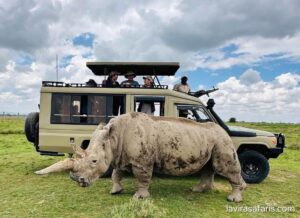
Choosing between fly-in safaris in East Africa and drive-in safaris decides how much time you spend on roads, how much you pay, and what kind of wilderness you experience. A drive-in safari means you leave Nairobi, Arusha, or Kampala in a 4×4 and spend several hours on tarmac and dirt to reach the park gate. You see villages, markets, and landscapes change mile by mile. A fly-in safari in East Africa means you take a scheduled light aircraft from Wilson Airport or Jomo Kenyatta International and land on a dirt airstrip not long after. You trade road time for flight time. Both get you to elephants. The difference is what you give up and what you gain.
Time is the first divide. Drive-in safaris in East Africa eat a full day each way. Nairobi to the Masai Mara takes most of the morning and afternoon if roads are good. Serengeti from Arusha takes most of the day plus border time if you combine countries. Bwindi from Kampala takes the better part of a day. You lose two days of a short safari just driving. That is time you are not watching lions. Fly-in safaris in East Africa cut that to under an hour. Nairobi to Mara is a short flight. Arusha to Serengeti depends on the airstrip but is still under two hours. Entebbe to Bwindi is a little over an hour. You eat breakfast in your hotel and have lunch watching zebra. For short safaris of a few days, fly-ins double your game time.
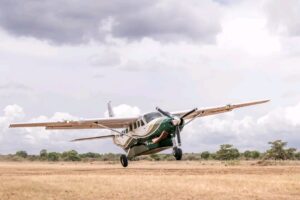
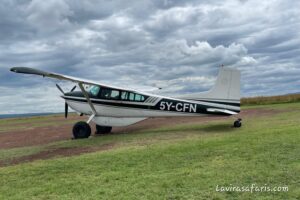
Cost splits the other way. Drive-in safaris in East Africa are cheaper on paper. A private 4×4 with driver guide has a daily rate that covers fuel, driver, and vehicle. Spread over several guests, the transport cost per person is low. You also avoid park flights. Fly-in safaris in East Africa add flights per person per leg. For a family, flights add up quickly. But cost per hour of wildlife viewing tells another story. On a short drive-in safari you get fewer full game days. On a short fly-in safari you get more full game days. Divide total cost by hours with wildlife and the gap shrinks. If time is your priority, fly-ins win for short trips. If budget is tight and you have many days, drive-ins win.
The experience changes with the road. Drive-in safaris in East Africa show you the country. You stop for fruit, see how people farm, watch the land climb from city to savanna. You feel the distance. Kids see geography happen. Photographers shoot roadside life. The downside is fatigue. African roads shake you. Dust gets in everything. After many hours you arrive tired, not fresh for your first game drive. Fly-in safaris in East Africa skip the grind. You see the patterns of rivers and migration paths from the air. You land and the camp vehicle is waiting. You are in camp soon after touchdown, showered and on a drive quickly. The trade is context. You miss the towns, the change in altitude, the sense of how far you really went.
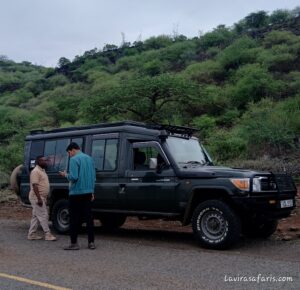
Luggage limits separate the two. Drive-in safaris in East Africa take anything that fits in the Land Cruiser. Hard cases, tripods, extra lenses, shopping from the city. No one weighs your bag. Fly-in safaris in East Africa run on small Cessnas and Caravans. Luggage is capped at a set weight per person in soft bags. No hard cases. Camera gear counts. If you are a photographer, that limit matters. Camps can store excess in Nairobi or Arusha, but you must plan. Drive-ins suit filmmakers and families with strollers. Fly-ins demand you pack light.
Game viewing rules are the same once you arrive, but access differs. Many remote areas in East Africa have no road access in the green season. Black cotton soil turns to glue. Drive-in safaris get stuck or cancelled. Fly-in safaris land year round. If you want the Masai Mara in April, the Serengeti in March, or Katavi in May, you fly. If you want the main reserve in dry season with good roads, you can drive. Fly-ins also unlock remote camps. Some of the best walking and night-drive zones in East Africa are only reached by air. Drive-in safaris stay on the public circuits.
Weather and delays hit both. Drive-in safaris in East Africa face police checks, traffic, and broken bridges. One accident can add hours. Fly-in safaris face low cloud and airstrip conditions. Morning fog in Bwindi or Mara can delay flights. Neither is risk free. But a delayed flight means you sit in a lounge with coffee. A delayed road trip means you sit in heat with no toilet. For comfort, fly-ins win. For control, drivers can reroute. Pilots cannot.
So which should you book. If you have only a few days, choose fly-in safaris in East Africa. You cannot afford to lose a large portion of your trip to driving. If you have many days, mix them. Drive to your first park, feel the country, then fly between remote camps to save time. If you are on a strict budget, drive-in safaris in East Africa keep it possible. If you are traveling with infants, heavy gear, or want to shop, drive-ins are easier. If you want the most remote camps, the green season, or maximum wildlife hours, fly-in safaris win.
The best safaris in East Africa use both. Fly to the Mara to save a day, drive from Mara to Naivasha to see the Rift Valley, fly to Lewa to avoid a long road, drive from Lewa to Samburu because it is short. Time, cost, and experience are levers. Pull the one that matters most to you.
Lavira Safaris plans custom fly-in and drive-in safaris across Kenya, Tanzania, Uganda, and Rwanda.
📍 Kenya
📧 Email: info@lavirasafaris.com
📱 WhatsApp: +254721757387