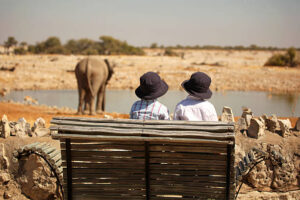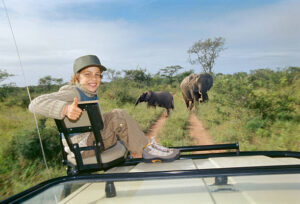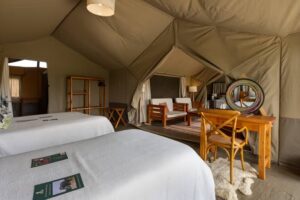
A family safari is one of the most powerful trips you can take with children, and it works when you plan around age limits, safety, and real kids activities. Parents searching for a family safari want clear answers before they book. How old should kids be for a safari. Is a family safari safe. What do children actually do all day in the bush. The right family safari balances wildlife, comfort, and pace so kids stay curious and parents stay relaxed. East Africa offers strong family safari options, but the rules and setup are what make or break the experience.
Age limits for a family safari depend on the country, the park, and the lodge. National parks in Kenya and Tanzania have no official minimum age for entry. You can take a baby on a game drive in the Masai Mara if you drive yourself. The limits come from lodges and activities. Most private safari lodges and tented camps accept children of all ages but set rules for game drives. Shared game drives usually start at 6 years because kids must sit still and quiet for 3 hours. Private family vehicles remove that limit. You can have a 2 year old on a private drive if one parent is ready to head back early. Walking safaris on a family safari have strict minimums. Tanzania sets walking at 12 to 16 years depending on the area. Horse riding safaris start at 12 to 14 years with experience required. Gorilla trekking in Uganda and Rwanda is fixed at 15 years by law. Chimpanzee trekking starts at 12 years. If your family safari includes primates, plan a split day so adults trek while younger kids do a nature walk with a guide. Always check the specific camp policy before you book because a family safari fails when you arrive and learn your 5 year old cannot join drives.
Safety on a family safari is built on three things: camp design, guide training, and parent rules. Most family safari camps are unfenced to let wildlife move naturally. That is safe when the camp runs proper protocols. Family tents have lockable doors, zips, and lights. After dark, an askari or guard with a radio walks you to and from your tent. You never walk alone at night. On drive, children sit in the middle seats with adults on the outer seats. No standing, no leaning out, no calling animals. Guides carry radios, first aid kits, and know the nearest airstrip for evacuation. Vehicles are open sided but high enough that lions see the vehicle as one object. The danger is not the lion. The danger is a child standing up and breaking the shape. That is why guides brief every family safari at the start. Listen, ask questions, and repeat the rules to your kids. Malaria is part of family safari safety in most regions. Use prophylaxis if your doctor advises it for your children’s ages. Pack long sleeves for dusk, use repellent with DEET or picaridin, and sleep under nets. Camps fog rooms and provide nets. Water is filtered. Food is cooked to high standards. The biggest safety issue on a family safari is dehydration and sun. Kids do not feel thirsty in a dry wind. Make them drink a liter before lunch. Reapply SPF 50 every 3 hours. With these steps, a family safari is safe from age 4 up. Under 4 is safe but intense for parents because of heat, early starts, and no playgrounds.
Kids activities are what separate a good family safari from a great one. The best family safari lodges do not just allow children. They plan for them. A day is split to match kids’ energy. Game drive at 6:30 a.m. for 2 hours, not 4. Back for breakfast, pool, and rest. Many family safari camps run a Junior Ranger or Young Explorers program. Kids get a booklet, track spoor, learn to use binoculars, identify birds, and earn a certificate. Midday is for bow and arrow lessons, beading with local women, baking in the camp kitchen, or planting a tree. Some camps in Kenya and Tanzania have Warrior Academy where children learn to throw a rungu, make fire, and understand animal calls. Afternoon drive is short and focused. Guides look for insects, chameleons, and nests because kids love the small things as much as elephants. Evenings are early dinner, stories by the fire, and bed. Most family safari camps offer babysitting so parents can do a night drive or have a quiet dinner. The goal is to avoid one long boring day and create four small adventures.
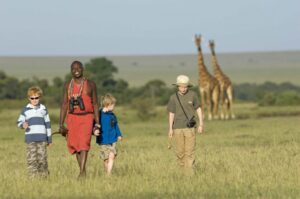

Room setup and vehicle setup decide your mood on a family safari. You need space. Ask for family tents with two bedrooms and two bathrooms, or interlinking tents with a shared deck. Kids should be close but not in your bed or you will not sleep. A private vehicle is the single best upgrade for a family safari. It costs more but means you control timing, stops, and snacks. If your 6 year old needs a toilet break every hour, you take it. If they fall asleep, you head back. If they are loving the lions, you stay. Sharing with strangers adds stress. Pools matter on a family safari. Afternoon heat is real and a pool turns a hard hour into fun. Ask about food. Good family safari camps cook simple meals on demand. Pasta, grilled chicken, fruit, and eggs at any hour. If your child eats only plain rice or no sauce, email the camp before you arrive. They will stock it. Bring a comfort item from home. A small toy or blanket helps with new beds and night sounds.
Transport and packing affect safety and behavior. For a family safari under 7 days, fly-in saves time and tantrums. A 45 minute flight beats a 6 hour drive with a tired 5 year old. For longer trips, mix fly-in and drive-in. Luggage on light aircraft is 15 kg per person in soft bags. That is enough. Kids need 3 shirts, 2 shorts, 1 pants, 1 fleece, 1 rain shell, sandals, closed shoes, hat, and swim gear. Camps do laundry daily. Pack a headlamp for each child, not a phone flashlight. Pack wet wipes, eye drops, and rehydration salts. Pack binoculars for each child. If they have their own, they look instead of asking when it is their turn. Leave tablets for the room. Do not bring them on drives. Leave the drone. Leave camouflage clothing because it is illegal for civilians in some countries. Leave new boots. Break shoes in at home.
The best ages for a family safari are 6 to 14. Kids remember it, can follow rules, and have stamina for drives and walks. Teens love photography, tracking, and learning to drive stick on the airstrip. Ages 4 to 6 work with a private vehicle and a camp that loves kids. Under 4 works in a private house with staff, where you set the schedule and skip drives if needed. A family safari is real nature. Kids will see hunting, mating, and death. Talk about it before you go. Explain that lions must eat and that is why zebras run. Most children handle it well when it is framed as normal. Guides are skilled at reading kids. If a child is scared, the guide will find giraffe. If a child is bored, the guide will find a dung beetle or let them hold the spotlight clip.
Choose the camp for families, not for price. A cheap camp will not have family tents, kids programs, or flexibility. Ask these questions before you book a family safari. What is the minimum age for shared drives. Is a private vehicle included or extra. Do you have family units or interlinking tents. What kids activities do you run daily. Is there a pool. Is babysitting available. Can you handle allergies and plain food. Clear answers mean a smooth trip. A family safari is not a zoo. It is time together without screens, with big skies and bigger questions. Pack right, pick the right camp, and your kids will ask to go back.
Lavira Safaris plans private family safaris across East Africa with family tents, private vehicles, and kids activities.
📍 Kenya
📧 Email: info@lavirasafaris.com
📱 WhatsApp: +254721757387